Content Middle
Main Content
.Overlooking 2000 years of history
History progressed unabated after the events of 9 AD when three Roman legions were defeated by the Germanic warriors. In 16 AD a Roman general returned to this sad site to bury the remains of his fallen comrades. After this the knowledge of the events which took place next to the Kalkriese Hill disappeared more and more in the gloominess of history.
It was only when the works of the Roman historian Tacitus were rediscovered in the 16th century that the battle in the forests of Germania was remembered again. Some historians began to think about the course of events. Later on many theories about the actual location of the battle existed. Theodor Mommsen, a famous historian of the 19th century believed that the combat took place in the surrounding area of Kalkriese. After all, the »Lords of Bar« had reported repeatedly that gold coins from the Roman Emperor Augustus had been found on their land. Many of Mommsen's colleagues contradicted him.
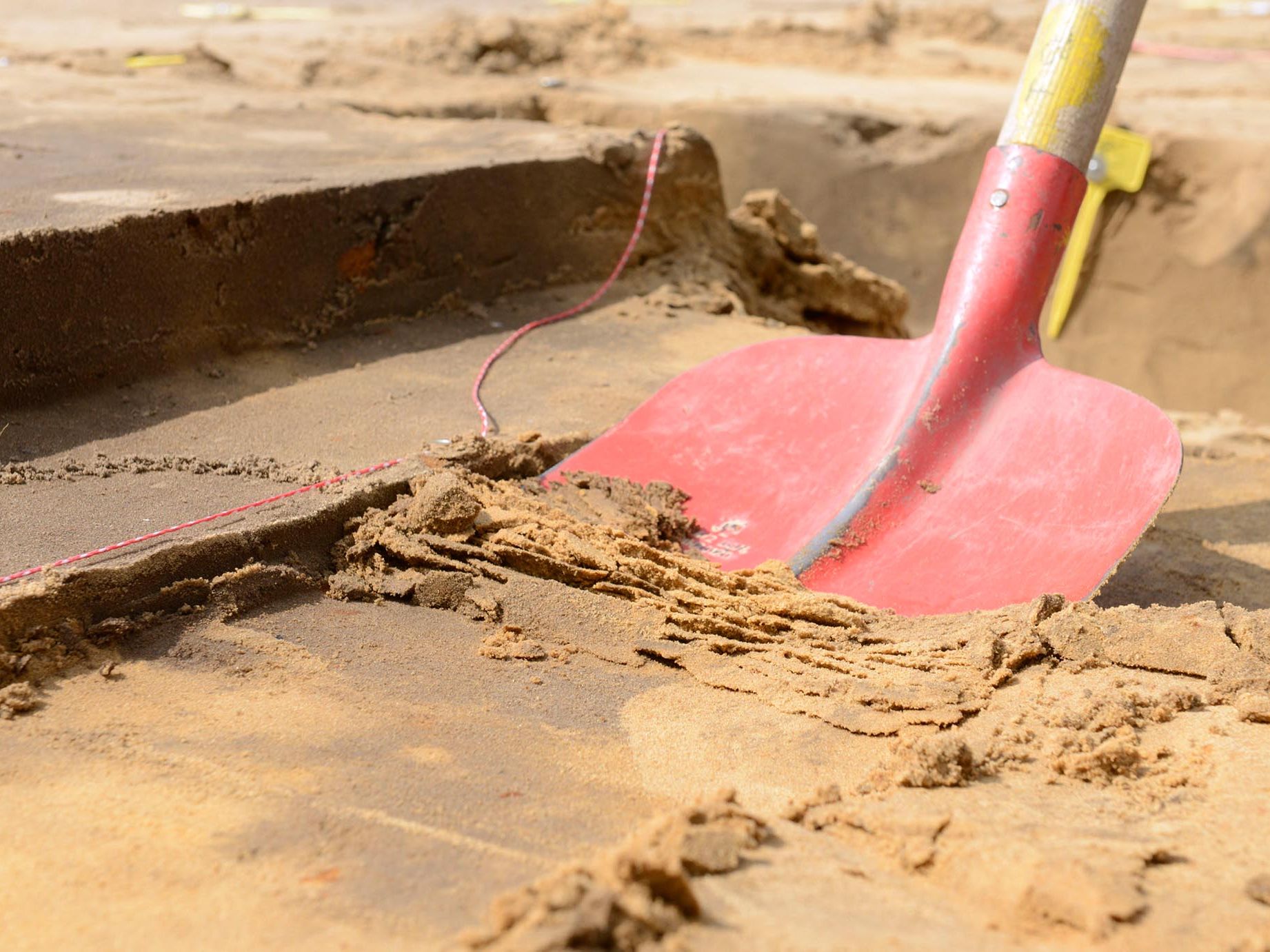
In 1987 the British soldier and amateur archaeologist Major Anthony Clunn decided to systematically search the area of Barenaue in order to find anything which would indicate an ancient battlefield. He did this in accordance with the archaeologist in charge of the town and Rural District Prof. Dr. Wolfgang Schlüter. Within a short while Major Clunn found 162 Roman coins and three projectiles made of lead. Systematic archaeological excavations began two years later with the intent to find out more about the history of this area. Many bronze coins, fragments of arms and military equipment, and eight pits containing human bones as well as skeletons of mules were discovered. Now it is evident that in Augustan times a fierce battle had taken place here and that a large number of Roman soldiers had lost their lives. The current and future excavations are to render further detail.
Already in 1990, interested local citizens with a lot of voluntary dedication decided to make the historic place and the excavations accessible to the public. A first Information Centre was opened. The latest state of information was explained to inquisitive visitors directly at the excavation site.
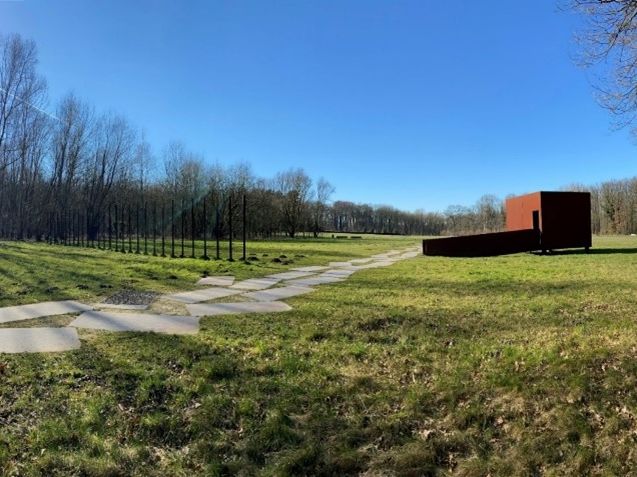
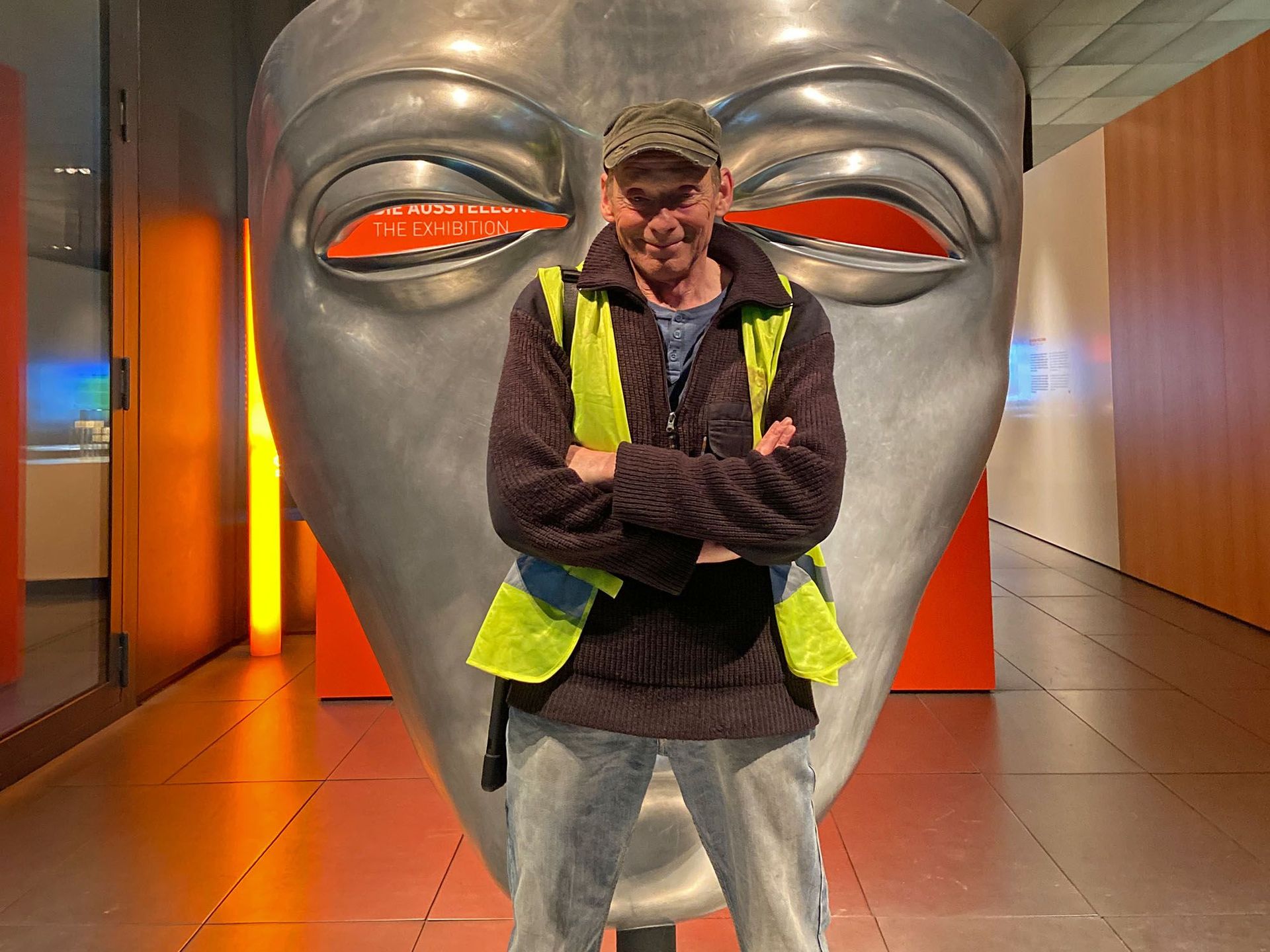
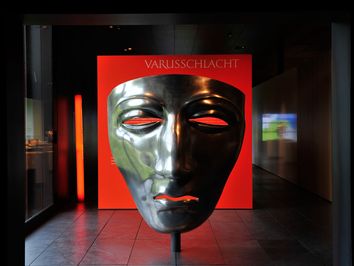
In 2000, an archaeological park with an information centre was set up in close proximity to the excavations. Interested visitors were always able to inform themselves about the process of the research and the first spectacular finds, like the cavalry mask.
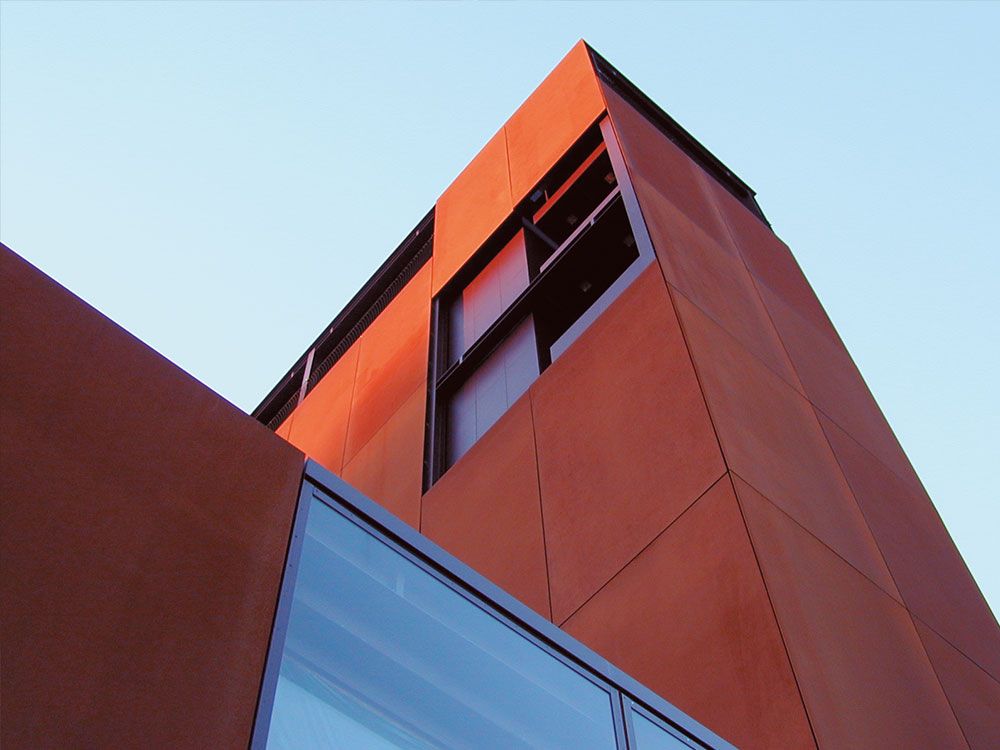
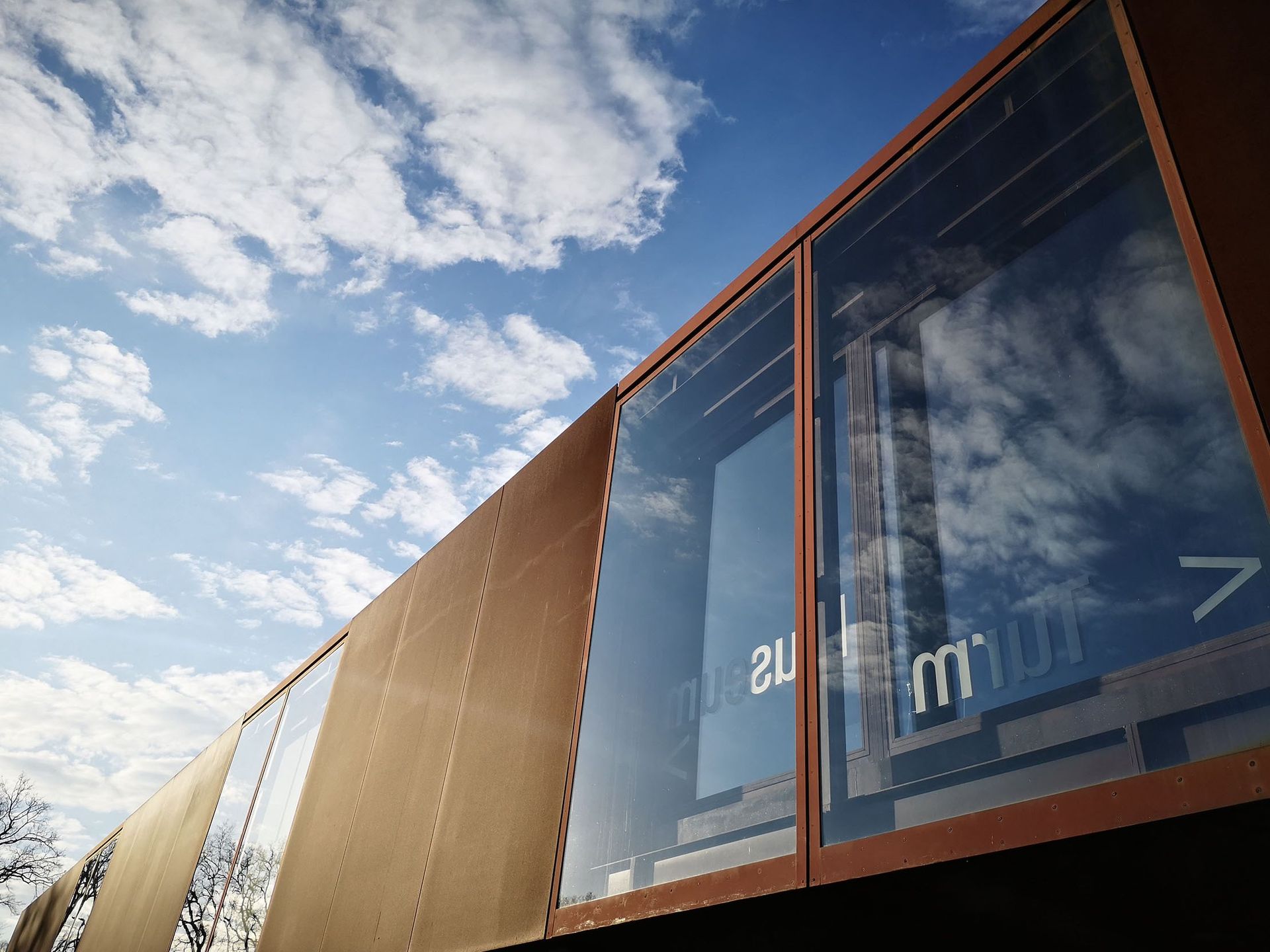
The new Museum, with an observation tower standing 40 metres (43.7 yards) high, opened in 2002. It hosts an exhibition, alongside two lecture halls. Here, the written records of the Varus Battle are presented, the leading and misleading tracks of archaeological and scientific research related to the finds discovered here, are elucidated.
Starting in 2003 Special exhibitions in tower and foyer of the museum offered more detailed information on various facets of the Varus Battles History. They were always accompanied by Topic Boards in the park – a round tour through the park completed the information. 2003 also was the Mommsen-year: Museum and Park honoured life and works of the first German Nobel Laureate for literature Theodor Mommsen who died in 1903. The well-known German historian, politician, solicitor and author published among other already in 1885 his beliefs, Kalkriese being site of the Varus Battle.
One and a half decades of systematic archaeological research work were presented in 2005’s Special exhibition »Kalkriese – 15 Years of Archaeology«. The visitors got to know the story of the research project, gained insights in working methods of archaeology and was able to comprehend with the aid of prominent dates and events, pictures and news articles this exciting development. Topic boards in the park explained the living conditions of the Germanic people – and why »Germanics« as one people actually never existed.
2005 Museum and Park Kalkriese was awarded the European Heritage Award in the category »Archaeological monuments« up to now the only archaeological institution in Germany that was awarded this prize. For this reason the museum presented the Kalkriese Culture Week.
In Summer 2006 the antique world of plants opened in Kalkriese. A Botanicum was created, where now plants grow that almost 2000 years ago characterised flora in the Roman Empire. Visitors will find there also a resting place perfectly fitted to have a picnic.
The special exhibition »gesprochen – geschrieben – gedruckt: Wie die Rede auf die Varusschlacht kam…« (spoken – written – printed: How talks came to the VarusBattle) focused 2007 on the central literary source. Half a millennium after talks have been brought back to the Varus Battle – initiated by the re-discovery of parts of writings by the Roman historian Cornelius Tacitus – Varusschlacht im Osnabrücker Land GmbH dedicates a special exhibition to the Roman author and his works. The exhibition shows the changeful way of Tacitus’ Annals through times and at the same time tells the history of reading, writing and books in the past two thousand years.
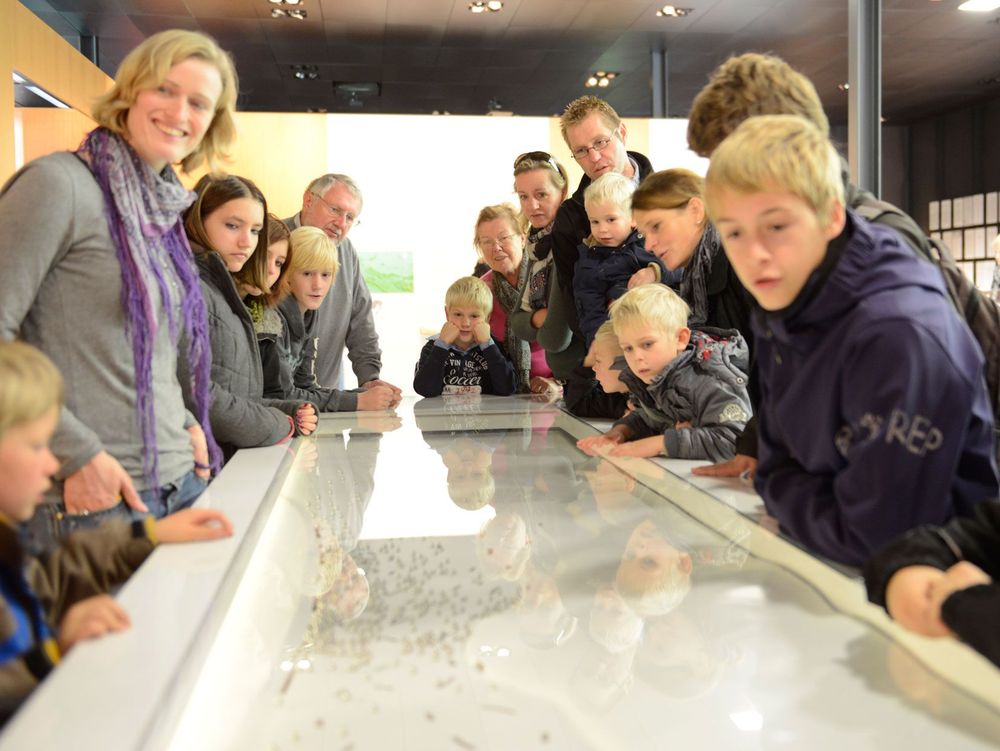
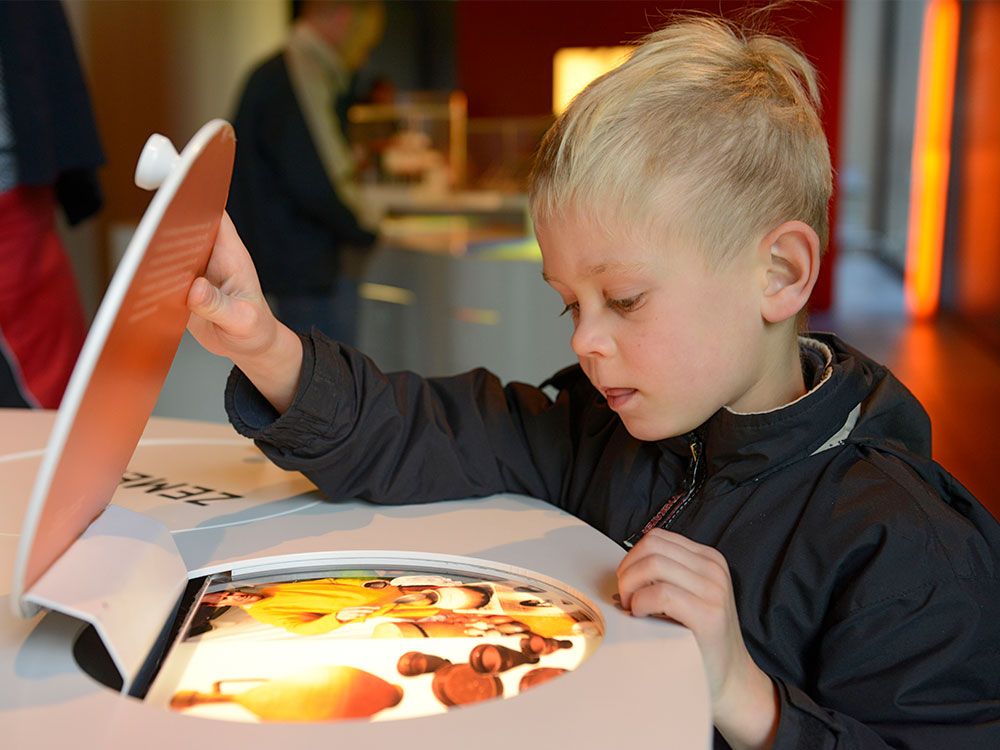
Since 2009 the updated Varus Battle exhibition focuses on the history of this unique location in a vivid way while offering an up-to-date overview of discoveries and knowledge gained in more than 20 years of multidisciplinary research. The realistic exhibition features numerous events and grants fascinating insights into both history and structures of the Roman Empire. It also illustrates the situation of the Germanic population in the Northwest of today’s Germany. Based on impressive artifacts and their modern presentation, it shows the current state of research of the Varus Battle and its site Kalkriese. Visitors will be able to visualize the world of Antiquity; they can follow the footprints of those who discovered the Kalkriese site, or they can listen to a fictitious dialogue between Arminius and Varus that will provide food for thought.
A new visitor center welcomes visitors to Museum und Park Kalkriese since 2009. Frequently, exciting special exhibitions displayed on the upper floor of the building feature archaeological sensations from all parts of Germany. The first exhibition ever held here was »CONFLICT« as part of the exhibition project »IMPERIUM CONFLICT MYTH. 2000 YEAR VARUS BATTLE«. It was followed by the special exhibition »MARCUS CAELIUS – DEATH IN THE VARUS BATTLE«. The traveling exhibition »A HEAVEN ON EARTH – THE SECRET OF THE NEBRA SKY DISK« introduced us to the mysterious world of our ancestors. In another traveling exhibition »STONE AGE MASSACRE. CRIME SITE TALHEIM«, an exceptional find of the century was presented at Museum und Park Kalkriese. The next exhibition was the join-in event »SOIL TREASURES – STORIES FROM THE UNDERGROUND«, focusing on the world underneath our feet.
Starting in June 2013, a special exhibition about gladiators will open, featuring the super heroes of Antiquity, as well as events and everyday life at the Colosseum.